 Epic7DB
Pet-Tinic Pediatric Drops: Understanding Liquid Supplements for Dogs and Cats
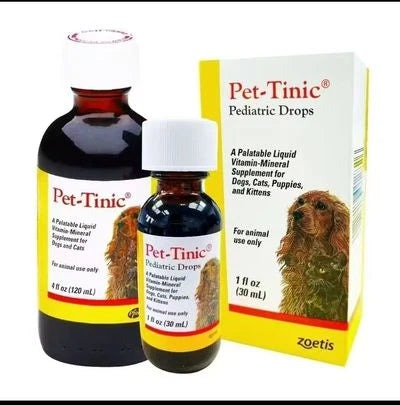 Liquid supplements have a reputation for being easy. No tablets to hide, no capsules to swallow, just a few drops in the mouth or on food. But liquids come with their own questions. How big is the bottle? How do you measure accurately? And does a dropper on the cap tell you how much to give?
Pet-Tinic Pediatric Drops is a liquid nutritional supplement for dogs and cats that raises exactly these questions. This guide explains how to identify the product, what the two bottle sizes mean, how liquid supplements compare with other formats and why your vet should guide how it is used.
What the listing shows
The Pet-Tinic Pediatric Drops listing on PetTheraCure presents an oral liquid for dogs and cats in 30 mL or 120 mL bottles, classified as a supplement. The page links to a manufacturer package insert for further reference. The full name matters. "Pet-Tinic Pediatric Drops" should be written out completely when you talk to your vet or a supplier, because shortened names can be confused with other products.
30 mL vs 120 mL
The two bottle sizes contain the same product in different volumes. The choice depends on practical factors:
- 30 mL suits short-term use or a first try to see whether your pet accepts the taste.
- 120 mL may suit longer-term use if your vet recommends it. The bottle volume tells you how much liquid is in the bottle. It does not tell you how much your pet should receive or how long the bottle will last. Those details come from the label and your vet.
Do not judge the amount by the dropper
A dropper or measuring device makes liquids easier to give, but its size is not a recommendation. A full dropper is not automatically a correct serving, and a few drops is not automatically a safe amount. Always:
- Read the label directions for your pet's species and size.
- Follow your vet's instructions if they differ.
- Use the measuring device supplied with the bottle.
- Ask if anything is unclear. The same principle applies to the purpose of the product. The label and your vet should explain why it is being used. The dropper presentation alone does not indicate what the supplement is for.
Liquid vs other supplement formats
Supplements for dogs and cats come in many forms. Each has advantages:
- Liquids: easy to give to small animals, measurable and often mixed into food.
- Tablets: compact and easy to store, but sometimes hard to give to cats.
- Capsules: can mask taste, but must usually be swallowed whole.
- Softgels: smooth and easy to swallow for many pets.
- Powders: sprinkled onto food, useful for pets that refuse tablets. The PetTheraCure nutrition and appetite category groups supplements and appetite-related product records and suggests comparing powders, softgels, capsules and liquids by the full label and pack. It also notes that the category does not diagnose appetite changes or replace veterinary assessment.
How to give liquid supplements
- Shake the bottle if the label says so.
- Measure carefully with the supplied device.
- Give it directly into the side of the mouth, or mix with a small portion of food if the label allows.
- Make sure the full amount is taken.
- Clean the measuring device after each use.
- Store the bottle as the label directs and note the date you open it.
Tips for puppies and kittens
If your vet has recommended a liquid supplement for a young animal, keep handling gentle and positive. Small amounts given slowly at the side of the mouth are usually easier to accept. Never squirt liquid quickly towards the throat.
When appetite or energy changes
Owners sometimes look for supplements because a pet seems tired, thin or uninterested in food. These signs can have many causes, some of which need prompt veterinary attention. Before starting any supplement, ask your vet to examine your pet. A supplement should support a plan, not delay a diagnosis.
Making an enquiry
Online checkout on PetTheraCure is not open yet, and price is available on request. When you enquire, include the full name, "Pet-Tinic Pediatric Drops", the bottle size (30 mL or 120 mL) and your location.
Storage and hygiene for liquid supplements
Liquids need a little extra care once opened:
- Close the cap tightly after each use.
- Store as the label directs, away from heat and direct sunlight.
- Write the opening date on the bottle.
- Clean the dropper or syringe after each use and let it dry.
- Do not let the dropper touch your pet's mouth if you plan to put it back in the bottle, as this can contaminate the contents.
- Check the expiry date before each new bottle. If the liquid changes colour, smell or texture, stop using it and ask the supplier or your vet.
Frequently asked questions
What sizes does Pet-Tinic Pediatric Drops come in?
The listing presents 30 mL and 120 mL bottles.
Is Pet-Tinic Pediatric Drops a medicine?
The listing classifies it as a supplement.
How much should I give my pet?
Follow the label directions and your vet's advice. Do not judge the amount by the dropper size.
Can I mix it with food?
Check the label. If it allows mixing, use a small portion of food and make sure it is all eaten.
Final thoughts
Pet-Tinic Pediatric Drops is easy to identify once you use the full name and confirm the 30 mL or 120 mL bottle. Measure carefully, follow the label rather than the dropper, and let your vet explain why and how it should be used. Liquid supplements are convenient, but accuracy and guidance are what make them useful.
SS



S



A



B



C



D